24 October 2011

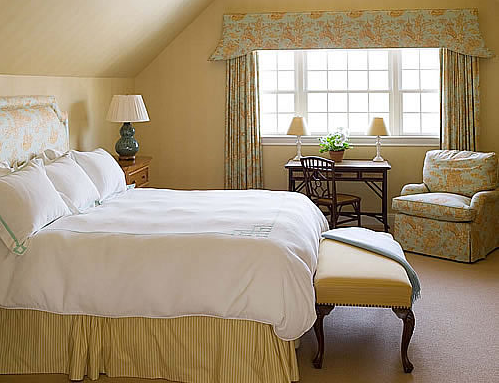
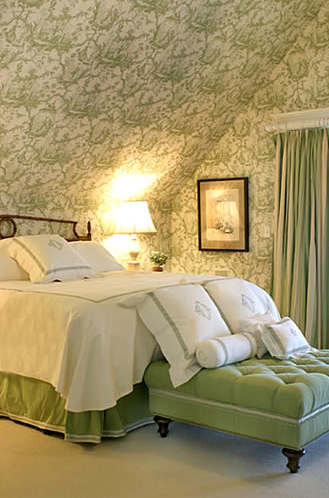
{Creating a Bedroom}


Where to find it:
The bed, the wallpaper is avaiable in Antropology.
The lamp is from Robert Abbey.
The bedding from Restaoration Hardware.
The rug is from Madeleine Weinrib.

23 October 2011

{A Practical Kitchen Design With Period Appeal}

remodeled kitchen in this spanish colonial revival house
Bad enough were the worn cabinets and awkward layout, but the room also lacked the kind of details found throughout their home, which has arched doorways, wrought-iron work, and an art-tile fireplace surround. Alicia, an avid cook, craved a top-notch range, and with the family having grown to include three children, they needed more food storage. Kitchen designer Dana Jones's solution delivered both without adding on. By incorporating a butler's pantry—just one cabinet and a swinging door between the kitchen and the dining room—she gave the room an extra 50 square feet, allowing for more counter space, a snack peninsula, two sinks, an alcove for the pro-style range, and a double refrigerator-freezer.
stove alcove with decorative tile backsplash
he stove alcove, set off with a cascading arch and hand-painted tile mural, highlights the showpiece range.
farmhouse sink in this remodeled spanish style kitchen
The farmhouse sink is a period-appropriate choice, and its deep basin conceals dirty dishes. The arched casement windows' soapstone sill is both handsome and practical.
floorplan of this spanish colonial style kitchen before remodel
The freestanding stove and refrigerator had no adjacent counter space; a butler's pantry added two extra doorways. 
floorplan of this spanish colonial style kitchen after remodel
The kitchen now opens up to the dining room via a wide arch; it has a long counter and small breakfast bar. The range alcove lines up with the fridge for a clean look.

1. Annexed the butler's pantry that led to the dining room, removing one wall and creating a wide archway in the other. This made space for an extended counter and breakfast bar on one side and a 60-inch fridge on the other.

2. Replaced the windows with identical sets of triple-arched casement models that echo arches throughout the house.

3. Added more arches. The doorway to the adjacent hall got a simple Roman curve; the alcove for the range got a cascading arch.

4. Built in a hutch with a serving counter along the entry to the breakfast room.

Images: This Old House.
A personal idea:
This fabric is very beautiful, from Soane Britain, do you like it?

{I Like the Smell of Rain}

Today, sunday, now winter cold and rain have arrived. And I can´t be happier, it's time to get winter clothing, sleeping with socks, and enjoy with the smell of wet grass.

Pinned Image

 Yes, I am a girl from the cold weather, I renewed myself in the rain. Rain purifies and calms the passions, and it attenuates the feeling.


“What is the meaning of life? That was all- a simple question; one that tended to close in on one with years, the great revelation had never come. The great revelation perhaps never did come. Instead, there were little daily miracles, illuminations, matches struck unexpectedly in the dark; here was one.” Virginia Woolf, To the Lighthouse


Pinned Image

21 October 2011

{Cole Phillips and Leslie Thrasher´s Flappers}

"Coles never painted anything but pretty girls. He used to get marvelous prices for his work, as much as, if not more than, any other illustrator." - N. Rockwell.

Phillips03
Phillips02
Phillips01

...then, Trasher appeared.

Thrasher04
Thrasher06
Thrasher08

20 October 2011

{The Traveller Apartment}


{Images: House and Garden; Beautiful}


{Oaks Floors+ Bright Spaces}

 Love the European oak parquetry floors...also the lantern in the double height entry is beautiful, I like the way it picks up on the colour of the stair balustrade.

{Think in Pink}

13 October 2011

{There are not Men like him Today: Mrs. Rattigan}


A British Dandy Biography: Terence Rattigan (June 10, 1911-November 30, 1977) was one of Britain's most important dramatists. He was born in London and educated at Harrow and Trinity College, Oxford, and his work to some extent reflects this privileged and intellectual background. Success as a playwright came early, with the light comedy French Without Tears (1936).

Terence Rattigan, by Yousuf Karsh, 1954 - NPG  - © Karsh / Camera Press
Rattigan's determination to write a more serious play produced After the Dance 1939, a fine satirical social drama about the 'Bright Young Things' and their failure to do anything to prevent the war. Unfortunately the war itself scuppered the play's chances of a long run. Rattigan would alternate between comedies and dramas, and after the war, a string of dramas made his name as one of the major playwrights of the day: The Winslow Boy (1946), The Browning Version (1948), The Deep Blue Sea (1952), and Separate Tables (1954).

            Rattigan believed in craftsmanship, structure, and his plays find their emotions in the depths. This all became very old-fashioned after 1956 when John Osborne's Look Back in Anger announced a new kind of emotional explicitness and intensity. Rattigan, like many other writers of his generation, suffered an almost immediate eclipse, falling into critical disfavour. Rattigan was not a thick-skinned writer and the decline in his reputation hit at his confidence. He retaliated in churlish interviews, and ill-advised comments in the plays, and in doing so he turned himself into the caricature that was being made of him: a conservative, old-fashioned, play-carpenter with no sympathy or understanding of the modern world. In fact, he was none of these things, and some of the better work of the last twenty years of his life, like Ross, Man and Boy, In Praise of Love, and Cause Celebre stand up with the finest of his other work.

           He was diagnosed as having leukemia in 1962 and recovered 2 years later, but again fell ill in 1968. He disliked the Swinging Britain of the 1960s and moved abroad, living for the rest of the sixties in Bermuda, and living off lucrative, but forgettable screenplays (for a time he was the highest-paid screenwriter in the world). He was knighted in the early seventies and moved back to Britain where he experienced a minor revival in his reputation before his death in 1977.

           Fifteen years after his death, largely through a magnificent revival of The Deep Blue Sea, at the Almeida Theatre, London, directed by Karel Reisz, Rattigan came to be seen as one of the century's finest playwrights, an expert choreographer of staged emotion, an anatomist of human emotional pain.

Several of his later plays were adapted for film and/or television. The best-known are:

The Winslow Boy (1946)
The Browning Version (1948)
Harlequinade (1948)
The Deep Blue Sea (1952)
Separate Tables (1954)
Ross (1960)

Terence Rattigan, by John Gay, 1949 - NPG  - © National Portrait Gallery, London


{Terence Rattigan Official Site.}